📸 Bucas Grande Sohoton Cove
← Swipe or tap thumbnails to browse · Tap photo to zoom
When most visitors think of Siargao Island, surf breaks and island-hopping to Naked, Daku, and Guyam islands come to mind first. But just a boat ride away sits one of the most distinct natural destinations in the entire province: Sohoton Cove on Bucas Grande Island. It is a place built around limestone caves, tidal lagoons, and a jellyfish sanctuary — a combination you will not find anywhere else in the region.
Sohoton Cove is located within the mangrove-fringed waters of Bucas Grande Island, which sits southeast of Siargao in the municipality of Socorro, Surigao del Norte. The jump-off point for most tours departing from Siargao is Dapa Port, with boats heading toward a registration area in Socorro before proceeding into the cove itself. The boat ride from Dapa takes roughly one to one and a half hours each way, making this a full-day commitment. Tours typically depart early — around 6:00 to 7:00 AM — and return by late afternoon.
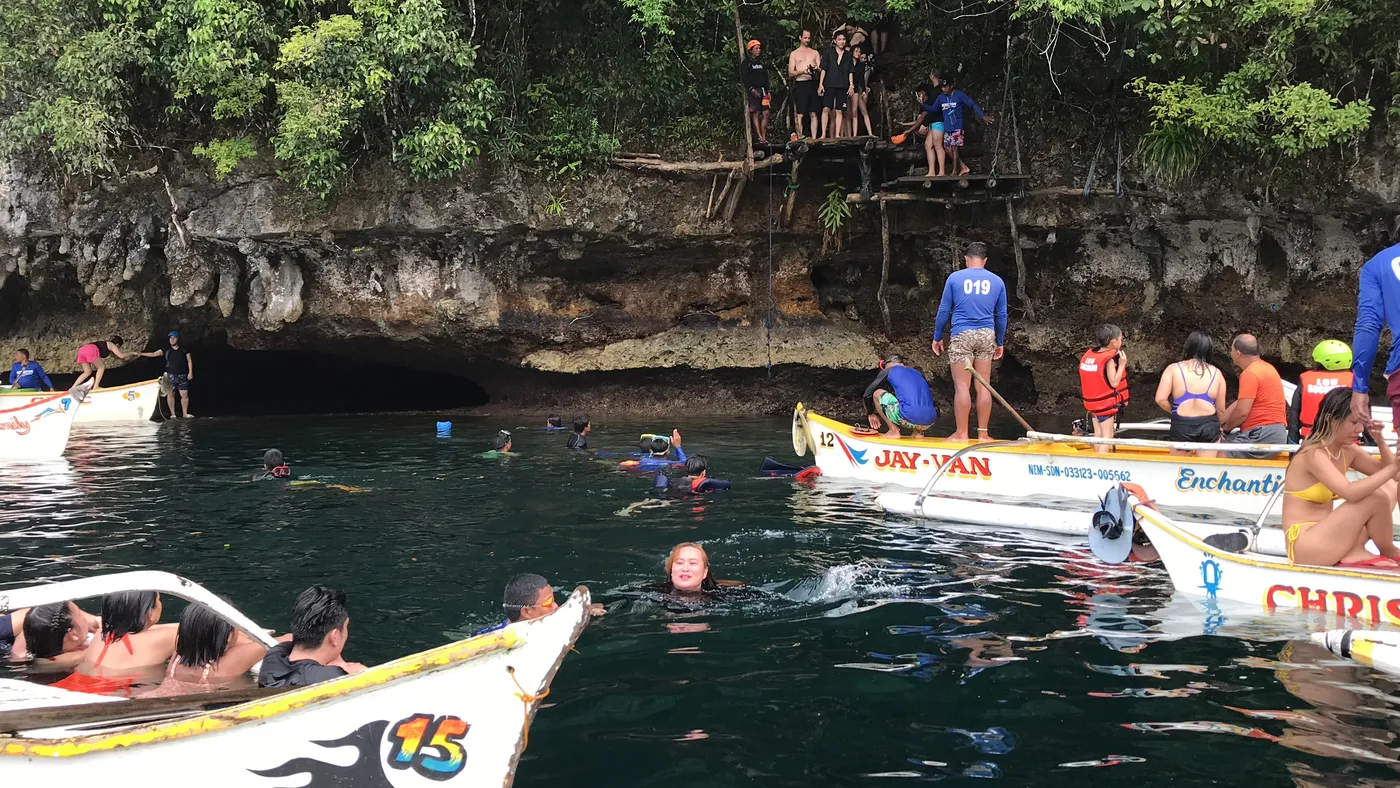
Sohoton Cove is not a single body of water but rather a network of interconnected caves, lagoons, and tidal channels enclosed by tall limestone formations. The entrance itself is a low-hanging cave passage that can only be navigated by boat during certain tide windows, and visitors are required to wear helmets as they pass through. Once inside, the cove opens into a series of distinct sites, each with its own character.
Hagukan Cave is one of the most talked-about stops on the tour. Its name comes from the Visayan word for "snore," a reference to the sound the waves produce as they interact with the cavern's air chamber during rising tide. The cave is also known for its bioluminescent water — when you splash the surface in the darkness, the water glows. This cave is accessible only during low tide, when visitors can swim into the passage and experience the luminescent effect firsthand.
Magkukuob Cave offers a more physically active experience. Visitors wade through waist-deep water inside the cave, move through chambers lined with stalactites and crystal formations, and then have the option to exit by jumping off a cliff platform into the water below. It is one of the more popular features of the tour for those who are comfortable in the water.
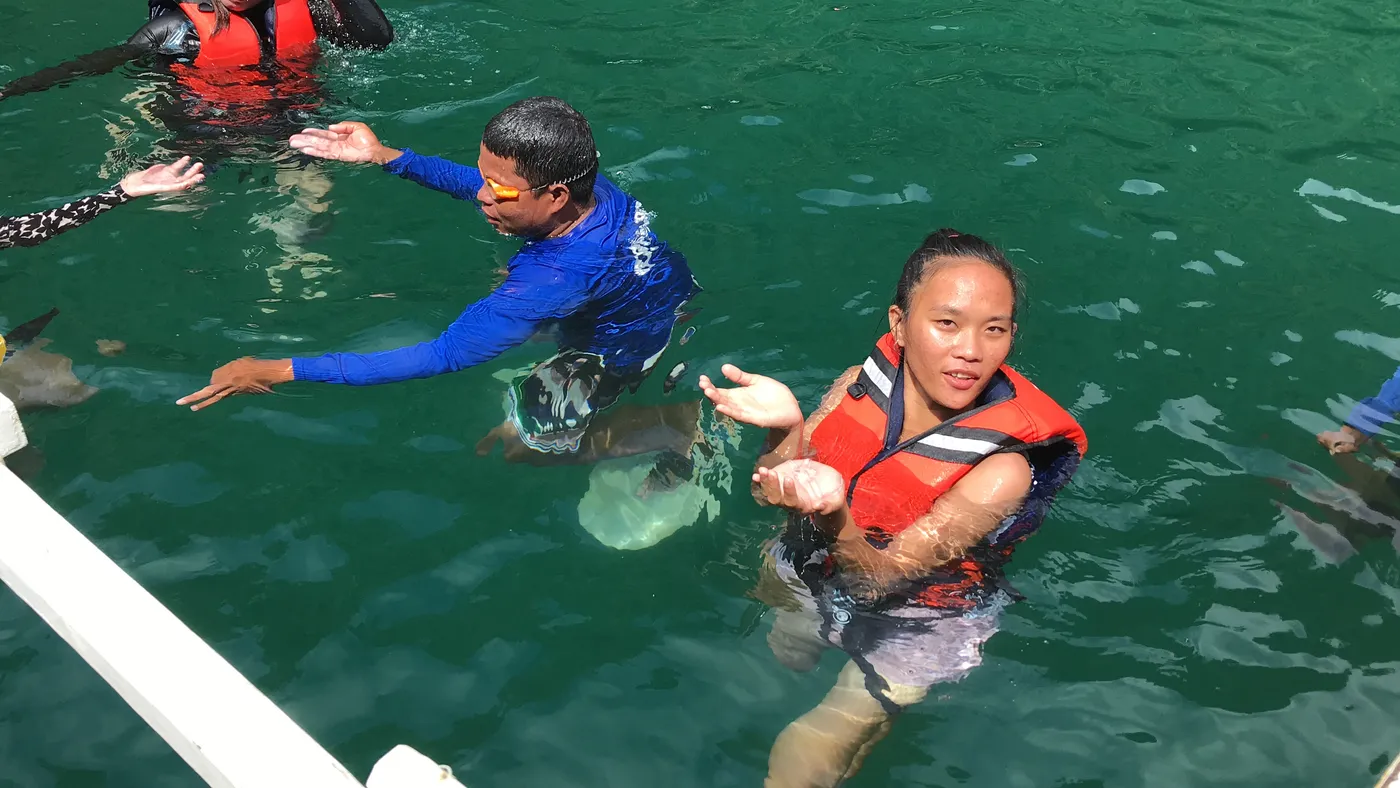
Tojoman Lagoon (sometimes spelled Tajoman) is the jellyfish sanctuary and arguably the most distinctive feature of the entire tour. The lagoon is home to a population of stingless jellyfish. During peak season, running roughly from February to June, thousands of these jellyfish are present in the water. Motorized boats are not permitted near the sanctuary; visitors transfer to smaller paddle boats for this section of the tour, keeping the area quiet and undisturbed. Due to conservation rules, swimming directly with the jellyfish may be restricted depending on current regulations, though visitors can observe them from the surface and, in some cases, touch them gently if they float up.
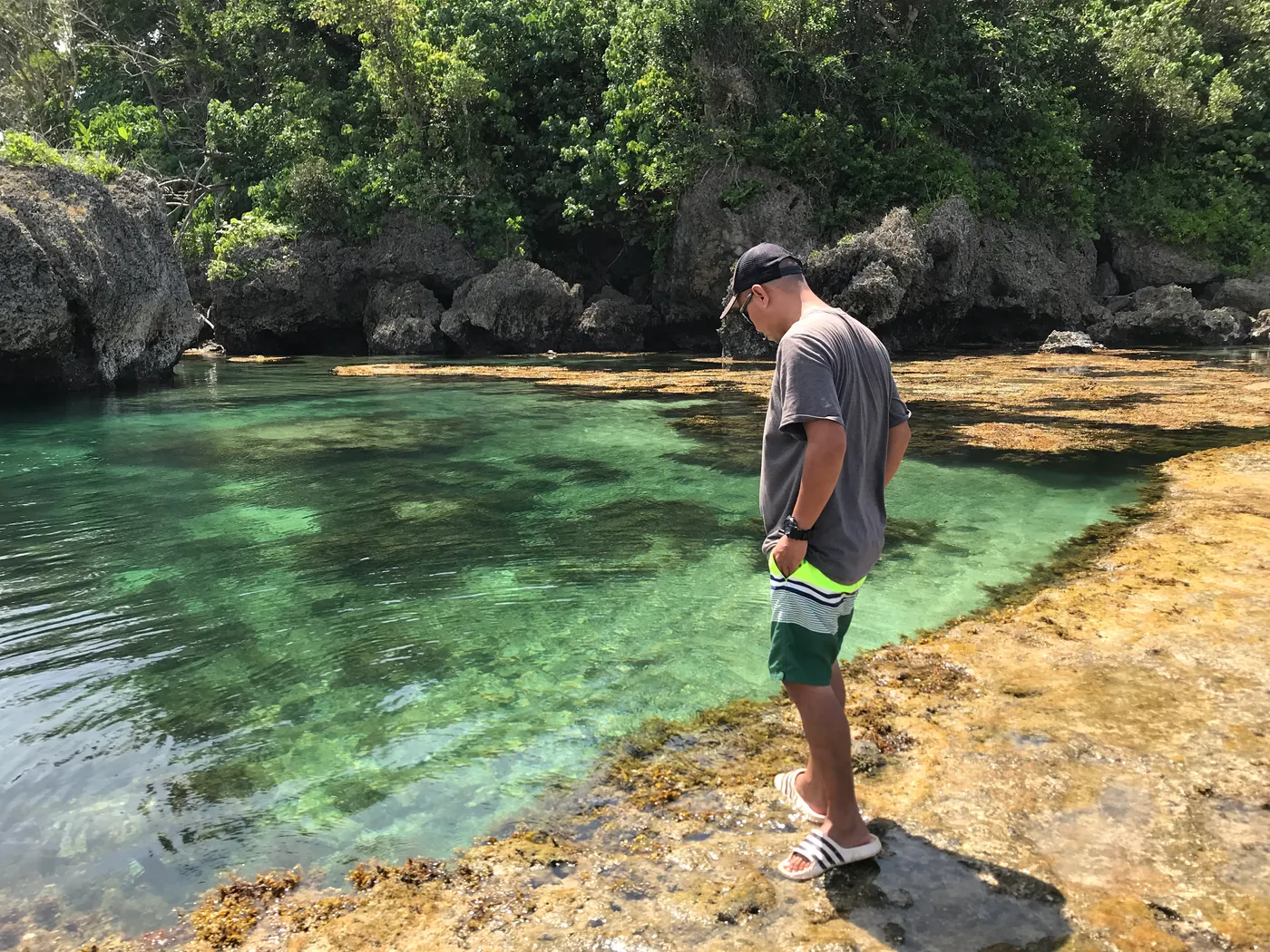
Tiktikan Lagoon is another stop commonly included in tour itineraries. It features clear, calm water set against a backdrop of rock formations and vegetation, and is suitable for a relaxed swim or snorkel. Some tours also include a stop at Bolitas Cave, where crystalline formations line the interior chambers.
For tourists already based on Siargao Island, the most convenient option is to book an organized day tour. These tours typically include pick-up from General Luna, transport to the port, the boat journey, on-site guide fees, and all entrance and environmental levies. Group joiner tours currently run at approximately ₱2,300 to ₱3,100 per person (roughly $40–$55 USD), while private boat charters for groups of up to ten people cost between ₱7,500 and ₱11,000. The consolidated on-site eco-tourism fee — covering entrance, safety gear, and a local guide — is around ₱800 per person, and this is usually factored into packaged tour prices.
If you are planning to travel from Surigao City to Siargao before or after your Bucas Grande trip, you can book your Surigao to Siargao ferry in advance at travelasiargao.com to make sure your transport connections are secure.
Jellyfish season in Tojoman Lagoon typically peaks between March and June, so if seeing the jellyfish is your primary reason for visiting, aim to go during those months. However, early February can also be a good window with fewer crowds than the full peak season. Weekdays are generally less busy than weekends, and arriving early in the day helps ensure smoother access through tidal cave passages. Cave access in particular is governed by tidal conditions, so your tour operator will confirm the ideal departure time based on the tide schedule for your chosen date.
Wear water shoes or old shoes you do not mind getting wet — the terrain inside the cove involves wading, climbing, and slippery rock surfaces. A waterproof bag or dry bag is strongly recommended for phones, cameras, and documents. Sunscreen is necessary for the open-water boat ride, but be mindful of the type you use if you plan to enter the jellyfish lagoon, as chemical sunscreens can harm marine life. Most tours provide basic safety gear such as helmets and life jackets, but it is worth confirming with your operator what is included before you depart.
Bucas Grande is also home to other sites beyond Sohoton Cove itself, including Cinnamon Island — a small island covered in cinnamon trees where local community members serve cinnamon tea made from boiled bark — and Marka-A Island, which remains one of the better snorkeling spots in the area. Some visitors choose to spend two to three days on Bucas Grande to explore these more thoroughly, but for most travelers based on Siargao Island, a single full-day tour to Sohoton Cove provides more than enough to make the trip worthwhile.
Ready to visit?
Skip the queue — book online in 2 minutes, pay via GCash.
Is Siargao Worth Visiting?